Re:filtered #24: A craft that outlasts an industry
Welcome to the 24th edition of my monthly newsletter on journalism in a moment of systemic disruption.
I've spent much of the past two years writing this newsletter telling you what's broken: the clientelism. The martyrdom fetish. The trickle-down funding logic. The samurai mindset.
This month, I want to end on a more hopeful note. I spent 2025 building, not because the problems disappeared, but because the industry's growing contradictions opened up unexpected spaces for experimentation.
When old funding dries up and the performance of journalism-as-savior becomes harder to sustain, it gets easier to think about what the craft could actually do for people.
What we built
So we did. Some of my highlights:
In Taipei, we gathered exiled media researchers with Google's Jigsaw team to share research methodologies no one else was putting in conversation.
In Chicago, the News Product Alliance Summit reminded me that a community of people asking better questions actually exists. I'm proud to have joined the NPA’s board this year. (Thank you, Feli!)
In Europe, we contributed to a public media funding blueprint for a small, wealthy country. The collapse of old assumptions showed that even where money is abundant, the core problem is conceptual.
We advised on reforms for a major public media organization - reforms we hope will be implemented, tested, and maybe even emulated elsewhere. We also pushed for a more effective European information policy.
So many of these exchanges helped me reconsider assumptions I'd internalized about journalism. First among them: a librarian at HOPE in New York who told me she does the same work I do without calling it journalism. She was right.
We launched the Newsroom Pivot Program with JxFund and the Center for Sustainable Media, bringing together exiled newsrooms from Azerbaijan, Belarus, Nicaragua, Russia, and Syria for months of experimentation around service and revenue.
Madison and I built the Audience Help Desk from a conference conversation into something real with amazing support from the Lenfest Institute. We presented our learnings on service design for journalism at Rosenfeld's Advancing Service Design conference, alongside practitioners in tech, healthcare and government who've been doing this work for decades. It’s been a great learning journey. I’ve signed up to get certified in service design next year.
In terms of research, we have started circulating work on constraint-based audience segmentation methods we used for a project in Iran (to be published soon), challenging notions of representative sampling.
We also documented how Western and Chinese large language models fail people differently, and drafted a conceptual framework for understanding information intermediation (censorship?) by those who run them.
And we started Field Notes, one-minute provocations on questions about media strategy we don't have answers for.
Throughout the year, we've published notes based on research done for the Open Technology Fund, enabling us to think outside the box on the key questions holding back journalists and technologists navigating autocratic settings.
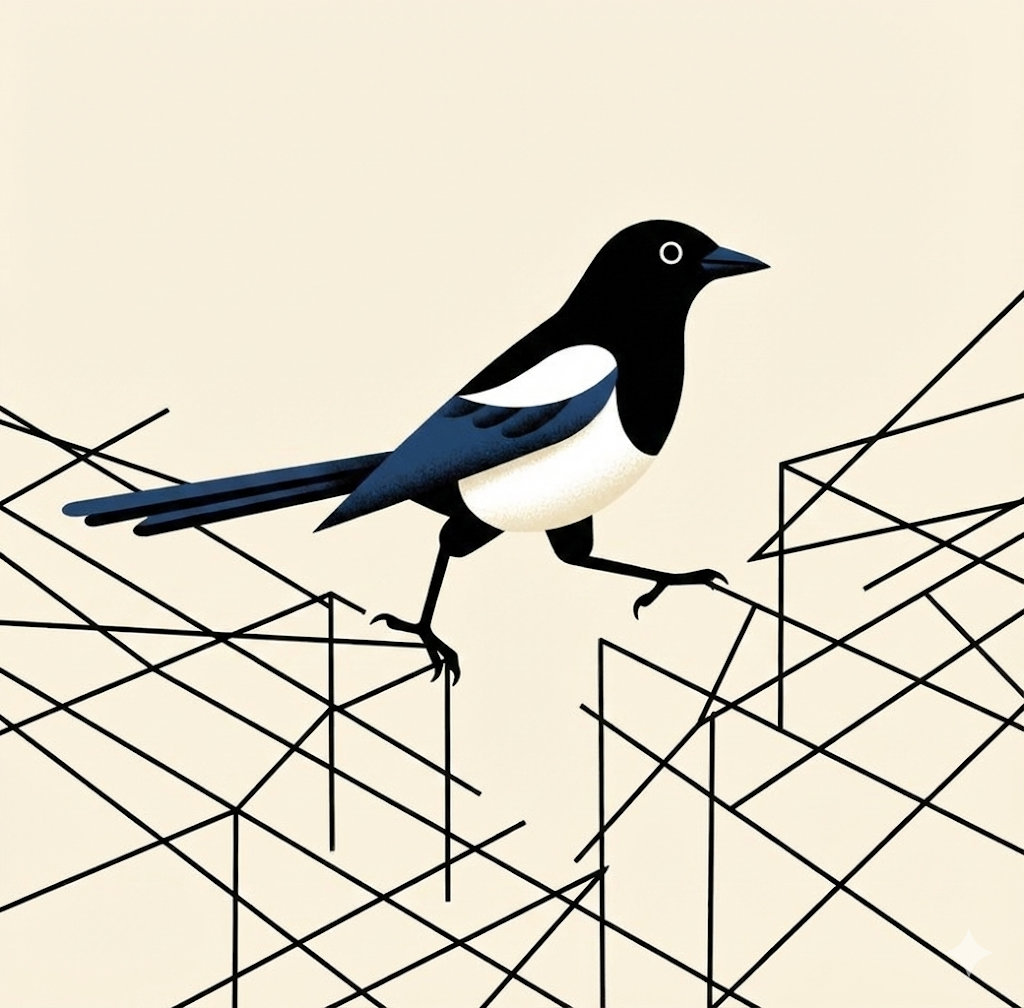
Some collaborators moved on to bigger things this year. Others just arrived. We've worked like a flock of magpies: drawn to shiny problems, building nests from whatever materials we find; focused on advancing information utility rather than preserving existing systems.
In all this, we never fit the boxes this industry reduces itself to (consultancy? research lab? publisher?). We're not trying.
What healthcare can teach us
This newsletter has been misread in the past year a few times as a fatalistic indictment of peers. That was far from the intent. I've just been arguing that the field is held back by a lack of conceptual clarity and self-reflection.
So much funding still supports activities rather than outcomes. We don't sufficiently distinguish essential public-interest work from vanity projects. We measure procedures performed rather than problems solved.
These arguments can sound abstract, so let me end the year by making them concrete with a thought experiment.
What follows is a fictional annual report from a fictional public health foundation.
It describes a healthcare system that operates the way much of journalism support currently does. The intentions are earnest. Its language is professional. Its priorities are, I hope you'll agree, absurd.
Everything in the report has a parallel in how we fund journalism today. I'll draw out those parallels afterward, but I suspect you'll spot them as you read.
The (Fictional) Public Health Foundation annual report
Dear stakeholders,
Another year of impact in the healthcare space. Our network of publicly funded wellness centers performed 847,000 medical procedures across 12 countries, reaching an estimated 4.2 million potential patients through awareness initiatives.
Healthcare remains essential to a functioning society. We are proud to support courageous practitioners doing this vital work.
Funding priorities
We fund all forms of healthcare without distinction. Cardiac surgery and teeth whitening. Cancer treatment and hot stone massage. Pediatric care and anti-aging facials. We believe all wellness interventions contribute to public health, and resist arbitrary hierarchies that privilege some forms of care over others.
Aesthetic excellence initiative: $14 million for our network of cosmetic practitioners. Their work on facial rejuvenation and body contouring has been recognized by seven international beauty councils. We're proud that public funding makes these services accessible.
Spa and wellness program: $9 million for therapeutic relaxation services. Aromatherapy, sound baths, crystal healing. These complement our clinical offerings and address the whole person.
Practitioner passion projects: $6 million distributed through our consulting arm to help doctors pursue innovative work that excites them personally. A cardiologist exploring music therapy. A dermatologist documenting skin conditions in Renaissance paintings. An orthopedist writing a memoir. We believe supporting practitioner creativity strengthens the field.
General wellness content: $22 million for health information production. Our centers published 340,000 articles last year on pharmaceutical developments, hospital administration, and medical policy.
Primary care: Our focus remains on high-impact interventions. We refer routine care to community resources.
Chronic disease management: We continue to explore opportunities in this space.
On public funding and market dynamics
Some critics argue that public health funding should prioritize essential care over elective procedures. We find this view limiting. Healthcare cannot be reduced to treating illness. Wellness encompasses the full spectrum of human flourishing through the self-expression of its practitioners.
Others suggest the market should determine which services people value. We agree that healthcare cannot be run purely by market logic. But we resist the implication that public funding requires prioritization. All healthcare is valuable. Distinctions between "essential" and "elective" reflect bias, not medical reality.
Impact testimonials from the community
A woman in Detroit asked for help managing her mother’s diabetes. We connected her with our award-winning investigation into pharmaceutical pricing. We noted her mother’s illness, and offered her a meditation app.
Several community members requested information about which local clinics have painkillers in stock and which doctors keep regular hours. We're exploring a pilot program to address these operational questions, pending funding. In the meantime, our meditation app is available on the Apple App Store.
Community health messenger initiative
To extend our reach, we're launching a program to train community members in basic health communication. Participants will complete a two-week certification and receive materials to share in their networks.
These trusted "barefoot therapists" will help bridge the gap between our institutional expertise and underserved populations. They'll distribute approved health messages, conduct basic screenings, and refer complex cases to credentialed practitioners.
What participants won't need to learn: diagnosing conditions, prescribing treatments, managing chronic disease, or the years of clinical experience that inform practitioner judgment.
But we believe partial training extends our reach, and reach is all that matters.
Impact measurement
We track procedures performed, patients potentially reached, and practitioner satisfaction. We're exploring additional metrics that might capture health outcomes, though these are complex to measure and attribute.
Healthcare is a public good. Its value transcends simple measurement.
Respectfully submitted,
The (fortunately fictional) Public Health Foundation
What healthcare actually does
Simon Galperin recently made a similar point in his Nieman Lab prediction, comparing journalism's current state to medicine before germ theory: same treatment for every ailment, no evidence-based understanding of what actually works.
Healthcare, especially in the United States, has real versions of these problems. Fee-for-service rewards procedures over outcomes. Hospitals optimize for billing codes. Specialists proliferate while primary care withers.
But even broken systems maintain some distinctions. Insurance covers chemotherapy differently than Botox. Emergency rooms triage. Medical schools teach that some interventions are essential and others elective. The hierarchy may be imperfect, but it exists.
European systems work better partly because they're rooted in consensus that basic healthcare is a fundamental right, and clearer about what public funding should cover. Someone has chest pain; they go to a doctor; the doctor tries to help. The abstraction layer is thinner. Universal coverage forces choices about priorities.
Journalism could learn from this. Think of it in three tiers:
- Essential care: Information that helps people navigate their lives. Which schools serve kids with learning differences. Whether your landlord's eviction excuse is legitimate. How to access benefits you're entitled to. This is primary care public-interest information (in the words of Patrice Schneider), the stuff that addresses actual conditions people face. It deserves public support because the market won't provide it at the scale communities need.
- Commercial services: Entertainment, lifestyle content, opinion, specialized business intelligence. Valuable to those who consume it, and commercially viable. Bloomberg terminals and Condé Nast glossies don't need grants; they have customers. When the market works, let it work.
- Mental health and meaning: Storytelling that helps people process their world. The narratives that build solidarity and shared understanding. The investigations that restore faith that someone is watching. This emotional infrastructure exists in both tiers above; some of it the market handles fine. Some of it needs public support. The question is always who gets served.
The fictional foundation refuses these distinctions. Cosmetic procedures and cardiac care draw from the same pool. Practitioner passion projects compete with chronic disease management. The refusal to distinguish essential from elective means everything gets funded equally, which means the boring, necessary work gets crowded out by the prestigious and the pleasant.
Why I still love this craft
None of this is cynicism about journalism itself: seeking new information, verifying it, and making it useful to others. The moment when scattered perceptions cohere into contextualized understanding. The skill of asking questions that unlock what someone actually knows. The satisfaction of helping people see something they couldn't see before.
Journalism at its best is a wondrous pursuit, and almost always a team sport: the careful sourcing, the structural choices that make complex things legible, the restraint that lets the material speak, the courage to publish what powerful people don't want known.
I've spent two years cataloguing dysfunction not out of cynicism, but because I want the craft to thrive in greater clarity of intent. The funding models that reward prestige over outcomes, the abstractions that substitute for service, the refusal to distinguish essential from elective: all of this holds back precious opportunities, and so much talent.
That person in Detroit deserves help managing her mother's diabetes. She also deserves the kind of reporting that explains why the healthcare system fails her, that documents which local options actually work, that connects her to others facing the same problem. The craft can do that.
The industry, as currently configured, still funds spa treatments and passion projects for lack of clarity of intent. Too often, it still mistakes viral reach for validated demand. It applies generic assumptions about what communities need instead of actually checking. That's the pity. We have something valuable and we're wasting it on ineffective procedures.
The dysfunction isn't just in funding. It's also in how we think about reach and access. Here's an example from the extreme end:
From collateral freedom to systems arbitrage
Many projects in censorship circumvention tech I've worked on over the past decade relied on a principle called collateral freedom.
The idea is that authoritarian regimes wouldn't block major platforms because the economic damage would be too severe. Host your content on Amazon's servers, and blocking you means blocking Amazon, services the government itself needs. Put your news site behind Cloudflare, and censoring you means disrupting thousands of businesses. The censor's own infrastructure becomes your shelter.
This year, we are learning that this bet is losing. Take changes in Iran's National Information Network: New research shows how the regime built a domestic internet that can keep domestic banking, government services, and e-commerce running while severing most international connections.
During protests, that means they can cut global access without collapsing daily life. The collateral costs that once constrained censorship have been largely engineered away. Russia is moving in the same direction. China pioneered it.
But autocrats around the world haven't solved their own coordination problem. They align around control and self-enrichment and little else, which creates imperfect systems with exploitable gaps. We are now learning to work these seams.
For instance, we've learned to exploit the gaps between verification and identity regimes that can't or won't recognize each other to enable access and anonymity for exiled journalists.
Moscow doesn't trust Beijing's identity systems. Tehran doesn't fully accept either. Each maintains its own standards, its own bureaucracies, its own technical implementations. That lack of coordination is the new constraint to exploit.
Systems arbitrage works differently than collateral freedom. Instead of relying on shared infrastructure, it exploits the gaps between flawed systems that don't coordinate.
I've written more about this elsewhere, but the principle matters here. This logic doesn't just apply to technical circumvention; it’s becoming the only way to support journalism in a decaying institutional landscape.
The old gatekeepers can't dictate what journalism should look like anymore. Legacy newsrooms are so focused on preservation that they've forgotten their potential to shape what comes next. The funders who demanded abstract impact metrics are watching their grantees fold anyway or operate in irrelevant abstraction.
Media leaders seeking algorithmic optimization and the consultants selling it are running out of things to optimize as platforms withdraw the reach they once provided for free.
This too is enshittification, the predictable decay of platforms that first serve users, then exploit them. It's happening to journalism as an industry just as it happened to search and social.
But enshittification has a shadow. While the established players scramble to preserve what's already dying, there's room to try things that would have been dismissed five years ago. The dysfunction creates sheltering spaces for different approaches and experimentation.
Madison and I were able to make a case for service design in journalism precisely because the tactical optimization game is falling apart. We don't have to fight the gatekeepers for permission to discuss first principles. (They're also too busy with AI licensing, subscription bundles, and how to recruit creators as distribution tools.)
So we get to ask different questions. Not "how do we get more reach?" but "who are we actually helping?" Not "what story should we tell?" but "what information gap are we filling?" Not "how do we save this institution?" but "what would people actually miss if it disappeared?"
These questions used to get dismissed as naive, philosophical, not business-relevant. Now they're the only ones that matter.
The craft will outlast the industry (in its current state)
The craft is older than newspapers, older than the word gazeta. Seeking new information, verifying it, making it useful to others. This discipline existed before mastheads, press passes, and journalism degrees. It will exist after whatever we're living through now.
I've seen this throughout 2025. The librarian at HOPE who told me she does the same work I do without calling it journalism. The parent in DC organizing community protection through Signal groups, sharing safety guidelines and real-time information. The Wikipedia editors who've maintained the world's primary information commons while we dismissed them as amateurs. They're doing journalism without the institutional markers we've treated as prerequisites. Someone has always been.
Throughout the year, I've found myself repeatedly at the perimeter of the industry's traditional gatekeeping. I lost count of how many times I was excluded from opportunities because I didn't fit a legacy definition of a "journalist" - no current newsroom affiliation, no institutional badge. In the past, I might have seen this as a professional hurdle, maybe even resented watching others sometimes cynically collect credentials engineered more for access than for service.
Now, I see it as a clarifying insight on a systemic mismatch. The industry is still using 20th-century credentials to measure 21st-century information utility.
And here we are, practicing the craft: seeking information, verifying it, making it useful outside the industry's boxes. I’ve realized that the craft doesn't need permission.
By choosing to exist outside the industry's boxes, I've become what I'd call a mesolomaniac - not chasing institutional scale like a megalomaniac, not grinding micro-tactics for indifferent platforms, but building in the intermediate space between (h/t Jen).
It's a strange position. You see opportunities that the big institutions miss because they're too busy preserving themselves, and that solo creators miss because they're too busy feeding algorithms. You have less agency than either, but a clearer view of the gaps. The valley between the peaks isn't crowded, and sometimes it can feel lonely.
But from here you can actually shape things at all three levels: helping institutions rethink what they're for, giving individual creators frameworks beyond the algorithmic grind, and building the connective tissue between them that neither would create on their own.
Looking back
This was a year I learned to say no. I said no to a well-paying publisher job, to a comfortable position in academia, and to a prestigious governmental council membership. Each was a real opportunity, and turning them down felt risky in an industry where scarcity thinking dominates. But none aligned with what I'm trying to build.
I still need to pay rent. I'm not pretending otherwise. But I've come to believe that if you're genuinely useful, focused, and willing to do the work, opportunities emerge that you couldn't have predicted. The universe is always bigger than what we can imagine for ourselves. I don't know what comes next. I don't need to know. There's beauty in letting yourself be surprised.
The Newsroom Pivot Program gave me a version of this in miniature. Eight exiled newsrooms in Berlin, forced to articulate who they help and how. When you demand that specificity, possibilities emerge that abstractions obscure. I was struck by how creative participants allowed themselves to be once they stopped defending their existence and started looking for actual opportunities.
For SplinterCon in Paris, at the eerie Espace Niemeyer, we presented our work to some of the world's most forward-thinking internet freedom technologists: the constraint-based segmentation research from Iran (admit you can't observe everyone, get specific about who you can, be honest about limits), and the systems arbitrage framework and some related experiments; more on this next year.
Back in New York, I attended an AI and journalism summit organized by the Brown Institute (Thank you, Mark). Representatives from leading news organizations and OpenAI gathered on the 44th floor of the Hearst Tower, a gathering of the old and new media elites, looking out over Central Park.
It felt like a summit between two eras of media history. The conversations have shifted from existential panic to execution, from "will AI replace us?" to integration questions around the Model Context Protocol and voice agents.
But while the technology has matured, the media business strategy hasn't much. Publishers are still trying to fit AI into the "content business" frame, licensing archives as if static data could substitute for living inquiry. I left convinced this is a path with diminishing returns.
As journalists (people practicing the craft), we possess capabilities that are structurally impossible to automate: uncommon access, verification under pressure, trust signaling.
Better informed models will win, and we can be key to that competitive edge. I wrote more about which opportunities to pursue and which to discard here. (TL;DR: archive licensing is for when you have nothing else to offer.)
Looking ahead
In January, I'll be in DC briefly. I'm sad to miss the Protocols for Publishers gathering my friend Chad is organizing in London, but if you're there, you really shouldn't miss it.
Some projects that were pilots this year will launch in earnest in 2026, iterated based on learnings and with validated demand. I'll share more in the new year.
We're producing reports and playbooks from our Iran research and looking for an illustrator to help make the work feel human, not academic. More here.
I'm optimistic, not because the problems are solved, but because I've stopped confusing the industry with the craft. The industry may not survive in its current form. The craft will. And the craft is what I signed up for.
We have the skills to exist meaningfully and earn a decent living despite the disruptions. It all hinges on clarity: who we're serving and how, what gap we're filling, what value we're creating. And on experimentation: trying things, learning what works, adjusting, being okay with failure.
Thank you for reading this year. If you have thoughts, just reply or message me on Signal (patrickb.01).
See you in 2026.
P.S.: Most-read editions this year: "Your suffering isn't a public service" (Oct.), "Allies without press passes" (Sept.), "Double servitude" (Nov.), and "Finding the nerds while journalism finds itself" (Aug.).
P.P.S.: This newsletter was not funded by the International Foundation for Writers' Wellness Excellence. Impact metrics: Zero spa treatments (unfortunately). Possibly some useful clarity. One year closer to figuring this out.